Skeuomorphism
Turn an object your customer already knows into a visual shortcut. A guitar can introduce a music app before anyone has read its name. The craft lies in choosing which parts of the real object carry that meaning.
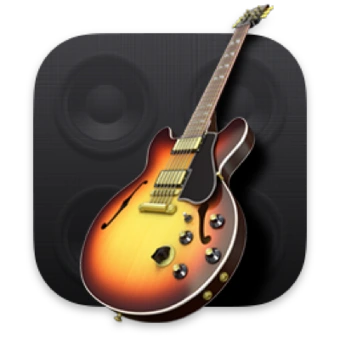
Examples to look at
- GarageBand
- The strings and tuning pegs identify a guitar even when the body is partly hidden.
- Apple Books
- The open pages borrow a physical gesture most readers recognise.
- Apple Contacts
- The tabbed address book makes a collection of digital names feel familiar.
What makes the object yours?
A leatherworker might start with a stitching awl rather than a whole workbench. Its pointed tip and wooden handle tell a specific story. A highlight along the handle can suggest polished wood, but the outline has to identify the tool first. Choose an object your customers would recognise without a caption.
Where realism earns its keep
This direction suits a maker, a specialist tool or an app that replaces a familiar physical task. A highly rendered object can convey care and knowledge of a trade. Fine texture is expensive to reproduce in embroidery, though. Ask for a simplified ink version early enough to influence the full-colour design.
Try the silhouette test
Photograph an object associated with your work, trace its outline, then fill it in. Show the shape to someone who uses your service. If they identify it, add back just one material cue and ask what changed.