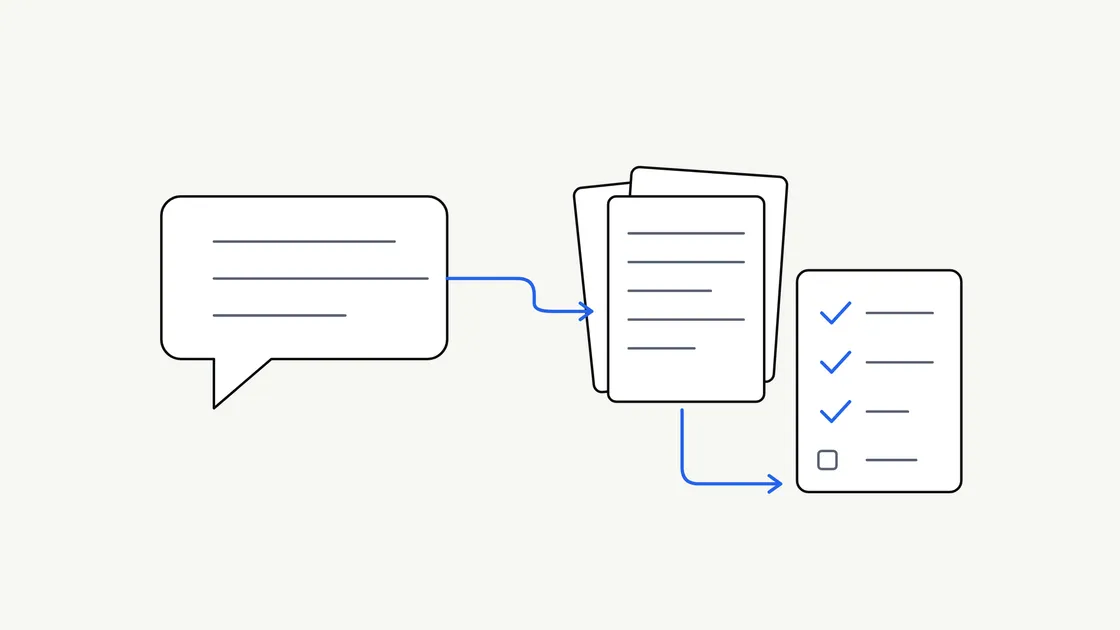
“We should have an AI assistant” is an easy sentence to say and a hard one to build from. An assistant is only as useful as the decisions made before it exists: what it is for, what it may draw on, what it must never do, and who looks after it afterwards.
This guide is for business owners who are curious but not technical. It walks through the questions worth answering first, so that any conversation with a supplier starts from a clear brief rather than a vague hope.
What an AI assistant actually is
In plain terms, an AI assistant is a tool that takes a question or request, uses a set of instructions and source material, and produces a written answer or piece of content.
It might help your team find information in your own documents, draft first versions of routine replies, or turn rough notes into a consistent format. It is not a person, it does not understand your business the way an employee does, and it can be wrong while sounding confident.
That last point shapes everything else in this article. A good plan assumes the assistant will sometimes make mistakes and builds in a way to catch them.
Start with one job, not a general helper
The most common planning mistake is asking for an assistant that “helps with everything”. Broad briefs produce vague results and are very hard to check.
Pick one narrow job first. Good candidates are repeatable, low-risk and easy to judge:
- Drafting a first version of replies to common, non-sensitive questions
- Summarising long internal documents into a standard layout
- Turning meeting notes into an action list
- Preparing consistent product or service descriptions from approved facts
If you are unsure where to begin, our guide to which business tasks to hand to AI first offers a practical way to choose.
A useful test for the first job
Ask yourself: if the assistant produced a poor answer, how quickly would someone notice, and how much harm would it do? Pick a job where the answer is “quickly” and “very little”.
Decide what the assistant may draw on
An assistant needs source material. The quality and tidiness of that material largely decides the quality of the output.
Think about three groups:
- Approved sources: Documents you are happy for the assistant to use, such as your service descriptions, policies you have reviewed, or standard wording.
- Sources to leave out: Anything out of date, contradictory, draft-only or simply wrong.
- Sources that need care: Anything containing personal, financial, medical or commercially sensitive information.
Out-of-date material is a quieter risk than people expect. If an old price list or superseded policy is in the pile, the assistant may use it without any sign that it is old. Someone in your business should own the question “is this still true?”
Be clear about what it must not do
Limits are as important as abilities. Write them down before work starts, in ordinary language. For example:
- It should not give legal, tax, medical or financial advice.
- It should not make promises about prices, timescales or outcomes.
- It should not commit your business to anything.
- It should hand over to a person when a question is outside its scope.
These are illustrative limits, not a complete list. Your own list will depend on your sector and your customers. If your work touches regulated areas, take advice from a suitably qualified professional on what is appropriate.
Plan for sensitive information
Many useful documents contain personal or confidential details. Before anything is shared, decide what needs to be removed or redacted, who is allowed to see the originals, and how files will be moved.
Our guide to using AI with confidential business documents covers what to share, what to redact and how to transfer files safely.
For personal data in particular, the UK regulator publishes guidance on AI and data protection. It is worth reading the relevant parts, and this article is not legal advice. Confirm your obligations with a qualified adviser.
At FinTaxTech, AI Automation is a managed service. Documents are transferred securely, and only once an engagement is in place. Some sensitive or regulated material may be declined.
Decide who checks the output
Every assistant needs a human reviewer. This is not a sign that the technology has failed; it is how responsible use works.
Decide in advance:
- Who reads the output before it reaches a customer or is published
- What they are checking for, such as facts, tone, and anything that should not be there
- What happens when they find a mistake, and who fixes the instructions or sources
A practical review process is described in how to check AI-assisted content before you publish it. If the assistant will write in your name, it also helps to agree your tone first. Our article on keeping your brand voice consistent explains how.
Planning table: questions to answer before you start
| Question | Why it matters | Example answer (illustrative) |
|---|---|---|
| What is the single job? | Keeps the brief narrow and checkable | Draft first replies to common booking questions |
| Who is it for? | Staff and customers need different safeguards | Staff only, at first |
| What sources may it use? | Controls accuracy and confidentiality | Approved service descriptions and policies |
| What must it never do? | Prevents promises and risky advice | No pricing promises, no legal advice |
| Who reviews the output? | Catches errors before they spread | The office manager, before sending |
| How will we judge success? | Stops the project drifting | Fewer repetitive tasks, with no drop in quality |
| Who keeps it up to date? | Sources and instructions go stale | A named person, reviewed regularly |
The example answers are made up to show the style of answer. Yours will differ.
Think about success and ownership
Vague goals lead to vague results. Choose a few plain measures of success before you begin, such as time saved on a named task or fewer corrections needed. Do not rely on someone else’s figures to set expectations, because every business and every document set is different.
Ownership matters too. Ask early who owns the final deliverables, the source documents and any accounts involved. In our work, clients own their own domains, repositories and cloud accounts, and ownership of agreed final deliverables passes to the client after full payment, as set out in the written proposal. Whoever you work with, confirm the terms in writing. This is not legal advice, and a solicitor can help if you need certainty on rights.
What a sensible first step looks like
You do not need a large project to learn something. A sensible first step is small:
- Choose one narrow, low-risk job.
- Gather a small set of approved, tidy sources.
- Write down the limits and the review process.
- Try it on a limited batch and have a person check every result.
- Adjust the instructions and sources, then decide whether to widen the scope.
This keeps cost and risk modest and gives you evidence from your own business rather than assumptions.
Before you start: a checklist
- We have chosen one narrow, repeatable first job.
- We know who the output is for.
- We have listed approved sources and removed out-of-date ones.
- We have identified documents containing personal or sensitive information.
- We have written down what the assistant must never do.
- A named person will review the output before it is used.
- We have agreed how we will judge whether it is working.
- We know who owns the documents, accounts and final deliverables.
- We have confirmed key terms in writing.
Talk it through
If you would like help turning a rough idea into a clear brief, we are happy to talk it through with no pressure. Tell us the job you have in mind and the documents involved, and we can say whether it looks like a sensible fit for our managed AI Automation service.